

















For More Inquiry
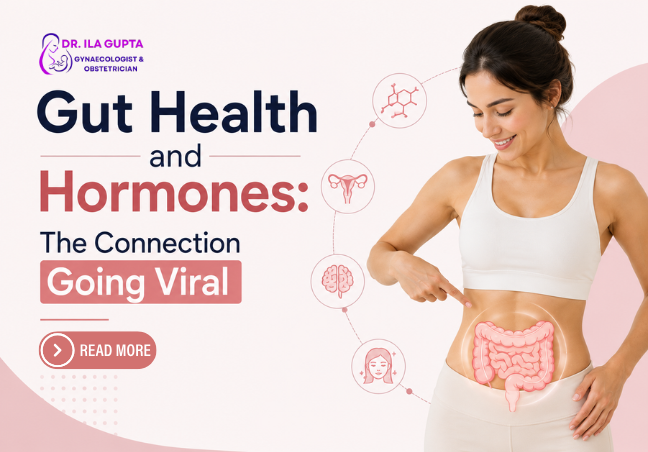
Scroll through social media today and you'll likely come across creators talking about gut health and hormones in the same breath. What was once a niche topic in women's health has become a viral wellness conversation, with many claiming that fixing your gut can fix your hormones. But is there real science behind gut health and hormones, or is this just another trend? Dr. Ila Gupta, the best gynaecologist in Ghaziabad, explains the actual connection.
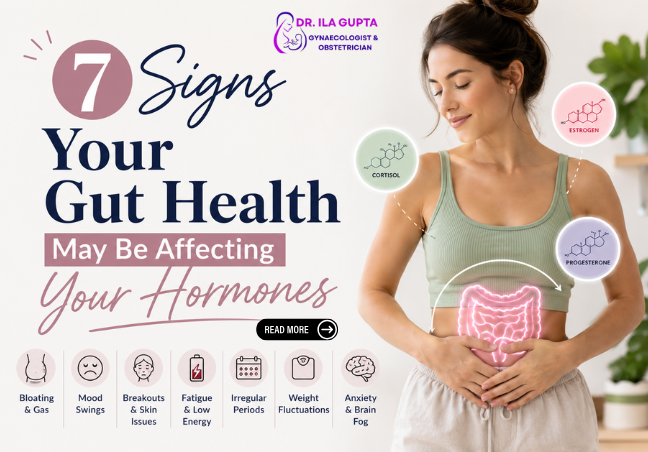
The topic of gut health and hormones has gained massive traction online, with countless posts explaining how bloating, acne, irregular periods, and mood swings might all trace back to gut imbalance. As more women search for natural ways to manage hormonal symptoms, gut health and hormones has become a go-to talking point across wellness platforms — and for good reason, since the science does support a genuine link.
The link between gut health and hormones centres around a specific collection of gut bacteria known as the "estrobolome." This group of microbes plays a direct role in metabolising and regulating estrogen in the body. When your gut microbiome is balanced, the estrobolome helps maintain healthy estrogen levels. When it's disrupted, it can lead to either excess or insufficient estrogen circulating in the body, which is where the connection between gut health and hormones becomes clinically relevant.
How gut health and hormones are linked:
Because gut health and hormones are so closely linked, an imbalance in one often shows up as symptoms in the other. Common signs include:
If you're noticing several of these symptoms together, it may be worth exploring the gut health and hormones connection with your gynaecologist.
Dr. Ila Gupta recommends a few practical steps to support both gut health and hormones simultaneously:
While social media often oversimplifies complex topics, the connection between gut health and hormones is genuinely supported by clinical research, particularly around estrogen metabolism and PCOS management. That said, Dr. Ila Gupta cautions against relying solely on viral advice or restrictive "gut-fixing" diets without medical guidance, since hormonal imbalances often require proper diagnosis rather than trend-based solutions.
While improving gut health can support hormonal balance, it's important to seek professional care if you experience:
As the best gynaecologist in Ghaziabad, Dr. Ila Gupta believes the growing awareness around gut health and hormones is a positive shift, encouraging women to take a holistic view of their wellbeing. However, she emphasises that lifestyle changes should complement, not replace, proper medical evaluation, especially for women dealing with persistent hormonal symptoms.
The connection between gut health and hormones is more than just a social media trend — it's a genuine, research-backed relationship that plays a role in everything from acne to menstrual regularity. While simple lifestyle changes can support this connection, persistent hormonal symptoms deserve proper medical attention. If you want expert guidance on gut health and hormones, Dr. Ila Gupta, the best gynaecologist in Ghaziabad, is here to help you understand your body and find real, lasting solutions.
Disclaimer: This blog is for informational purposes only and does not substitute professional medical advice. Please consult Dr. Ila Gupta or a qualified gynaecologist for guidance specific to your health.
Yes, to an extent — a healthy gut supports better estrogen metabolism, but severe imbalances need medical evaluation.
Q2. How long does it take to see hormonal changes from gut health improvements?
Most women notice gradual improvements over a few months of consistent dietary and lifestyle changes.
Q3. Is probiotics enough to fix hormonal issues?
Probiotics can help support gut health, but they aren't a standalone treatment for underlying hormonal conditions.
Stay informed about women's health tips, pregnancy care, and gynecological updates.